This is part of a series of lessons I have taken from my collaborative decision-making practice and applied to family life.
Meeting Purpose – Clarity on When We Will Play Video Games (and other things)
My kids and I are our best selves when we know what to expect. Without it, each moment seems like a fight about whether now is the right time for screen time. So my first attempts at collaborative family decision-making came with meetings to make a plan for the day.
Meeting Agenda – Tell, Share, Plan
As I’ve shared before, Kid Meetings start with cuddles. Then we make the Plan for Today, following this pattern:
- Tell: We start with some parameters: pre-planned events, weather constraints, different opportunities. These come from the top-down – I tell them what I know. Then I stop telling and start listening.
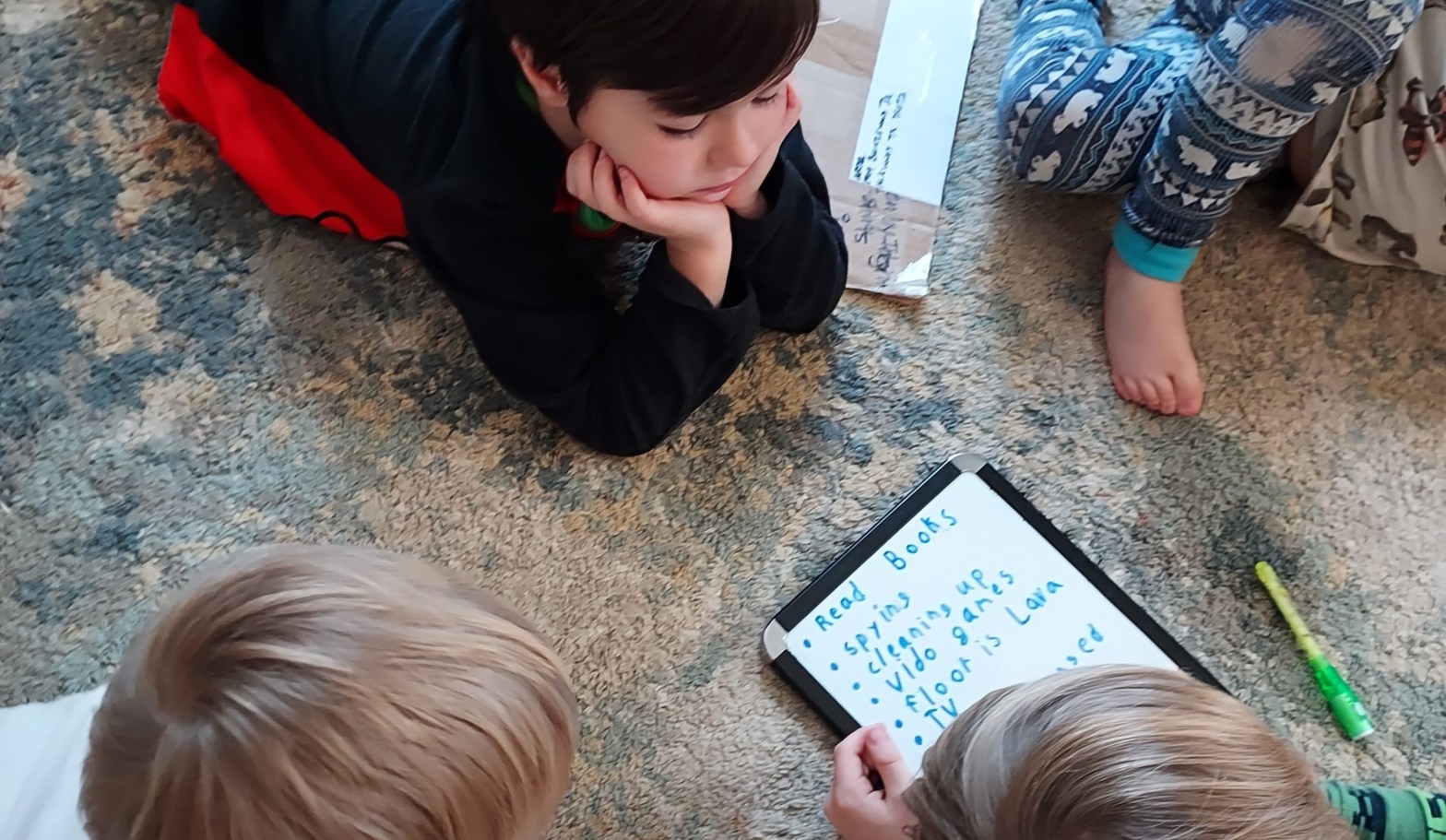
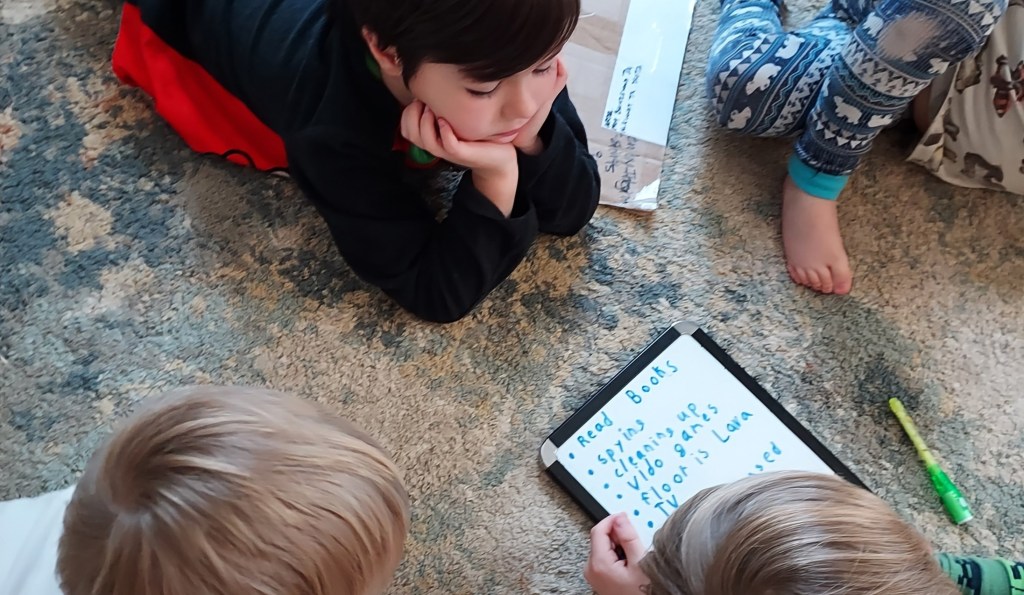
- Share: We brainstorm what we each would like to do with the day. Generally, the kids offer ideas of how to play, and I list the most urgent chores. But by brainstorming a long list of fun activities, playing screen time ends up as just one of many options. Already, this is progress from “Can we play video games now???”
- Plan: Then we look at the list together and sort it into a plan.
Meeting Outcomes – A Shared Understanding
In a recent “Plan for Today” meeting, the three-year-old suggested a “work-play-work-play” format, which we all agreed seemed fair. We agreed that outside play should be first, when energy was high and temperatures were low. We had several suggestions for where to go outside and considered each option together. We agreed to use the Tidying Game for our chores, which we designed collaboratively in a previous meeting. And all of us – me included – practiced clear communication, patience, deep listening, and compromise throughout our discussion.
It wasn’t perfect, but it was much better than my old approach of “Do all the chores, and then we’ll see if there is time for fun.” As the day played out, the kids were less upset when it was time for a fun activity to end. The flow of the day kept spirits high. The house is tidier, video games were played, and art was created.
And throughout, they knew what was coming next and (for the most part) didn’t question whether it was a bad decision – it was their decision, after all.
 Mia L. Arter Consulting